
Economic security is built together.
No company sees the whole picture of its geoeconomic exposure, and no ministry sees the corporate one. The Economic Security Forum (ESF) builds partnerships with companies, public institutions and research organisations: shared programmes, shared tools and shared networks, all working from the same evidence.
Three ways we work with partners
Our flagship is the Nordic Economic Security Programme (NESPO). Alongside it, we build joint products with technology partners and run readiness programmes with international partners.
A trusted platform where companies, ministries and financial institutions build shared situation awareness on geoeconomic trends.
Built with Inclus, a Finnish risk-platform company: a scenario stress test of corporate strategy across different geoeconomic futures.
Since 2025: economic security training in Central Asia and Ukraine, and public-private readiness programmes with CIPE's local partners.
Nordic Economic Security Programme
NESPO is where the Nordic economic security picture comes together. It is a trusted Nordic platform that brings companies, ministries and financial institutions together for shared, cross-sectoral situation awareness on geoeconomic trends and joint policy responses.
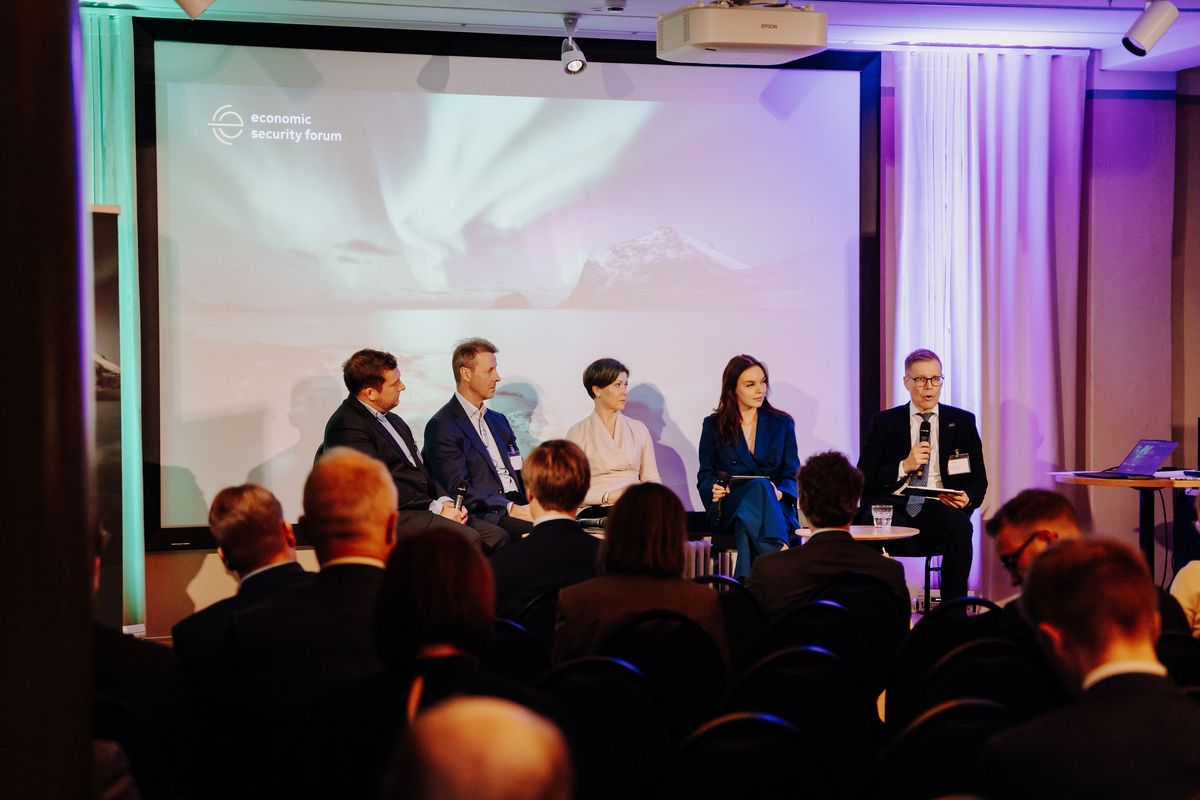
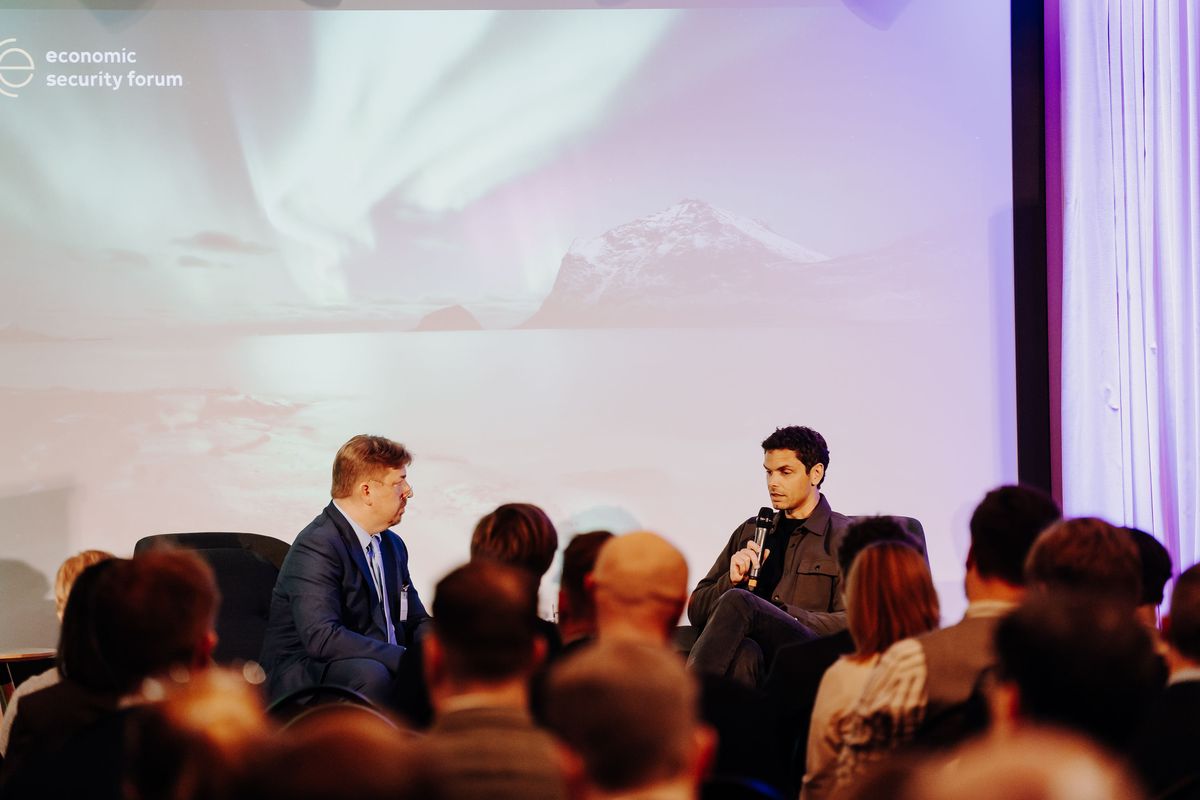
A gap nobody closes alone
Companies watch their own exposure and governments watch the policy picture. Neither sees the whole, and the dependencies that matter run between them.
Mapping, dialogue, Forum
A three-part cycle. ESF maps each participating company's geoeconomic exposure. A full-day Working Dialogue follows, with peer exchange and a scenario exercise under the Chatham House Rule. The annual NESPO Forum launches a flagship report. The result is shared situation awareness.
Four countries, both sides of the table
Companies from energy, logistics, pharmaceuticals, industry and technology services, alongside foreign ministries, resilience agencies, financial institutions and research institutions, across four Nordic countries.
What participants receive
- A confidential Geoeconomic Landscape Assessment and the annual Nordic Strategic Competitiveness Report
- Scenario exercises, dependency mapping and an economic security wargame
- A seat alongside ministries, resilience agencies and financial institutions
Launched on 4 November 2025 with a keynote by Finland's Foreign Minister, Elina Valtonen. The founding cohort has met in three Working Dialogues, hosted by Hannes Snellman in Helsinki, Digital Hub Denmark in Copenhagen and the Stockholm School of Economics' Center for Security and Resilience in Stockholm. The NESPO Forum takes place with the Nordic Investment Bank (NIB) in Helsinki on 1 December 2026.
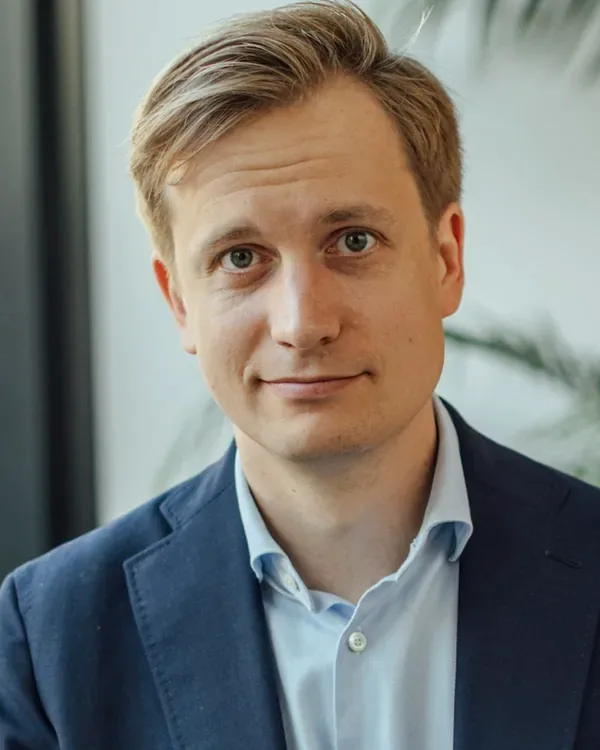
Antti Viktor Rauhala
Chief Operating Officer · NESPO Programme Manager
Geoeconomic Fitness Test
ESF and Inclus have built the Geoeconomic Fitness Test together: a scenario stress test that shows whether a company's strategy and key functions remain viable across materially different geoeconomic futures, and what management should do now to prepare.
Risk registers assume the environment
Geopolitical and geoeconomic shifts can rapidly alter market access, supply chains, technology access, sanctions exposure, financing and talent. The question is not what could go wrong, but whether the strategy itself holds if the operating environment changes.
One methodology, two partners
ESF brings the geoeconomic content: scenarios, functional impact logic, enterprise analysis, strategy synthesis and facilitation. Inclus brings the digital infrastructure: structured assessment, aggregation, visualisation and governance workflow on its platform.
Can your strategy survive more than one future?
A five-step process: scenario architecture, a functional stress test, enterprise exposure, strategy synthesis and a board package. Built around a half-day workshop, it produces non-regret measures that hold across futures rather than another risk register.
What clients receive
- Three to four divergent geoeconomic futures, from a standing library or built for you
- A Geoeconomic Fitness Matrix across management functions and an enterprise-level exposure map
- A facilitated strategy workshop and a standard board package for risk, audit and the full board
- A periodic Fitness Refresh that updates the scenarios, reviews progress and keeps the board package current
Inclus is a Finnish company whose platform supports collaborative risk assessment and governance workflow.

Dr. Christian Fjäder
Head of Research
Center for International Private Enterprise (CIPE)
Since 2025, ESF and CIPE have built economic security capability where it is needed most: training for business associations and policy institutes, and a public-private programme that tests whether the institutions that set economic security policy and the companies that carry it out can work together under pressure.
The governance gap
Governments set the rules on export controls, investment screening and sanctions. The companies that run the ports, grids, factories and financial systems have to carry them out, yet they are rarely treated as first-order actors in national planning and almost never tested for their own readiness.
See, test, act
Each engagement follows ESF's Economic Security Readiness Assessment: a scored baseline of where the real gaps sit, a locally facilitated tabletop exercise built on a realistic, escalating disruption scenario, and a short list of prioritised recommendations.
Public and private as equals
Senior officials and private-sector leaders take part side by side, roughly one third public and two thirds private. The result is a genuine exchange under pressure, not a one-way briefing in either direction.
What each engagement produces
A scored readiness profile across economic security domains, specific to the country and sector
A tested exercise that puts senior public and private decision-makers under a realistic scenario
Ranked recommendations that government and business can carry forward together
In Kazakhstan and Kyrgyzstan, ESF designed the economic security curriculum for a CIPE programme for local businesses and associations, and trained local instructors to carry it forward. In Ukraine, from 4 to 6 August 2026, ESF and CIPE ran a training programme in Lviv for business associations, chambers of commerce and policy institutes, built on a needs assessment of 23 organisations. Participants rated it 4.6 out of 5.
"The most valuable part was learning how to translate global geo-economic trends into practical implications for business resilience, strategic decision-making, and advocacy in Ukraine."
Participant, ESF and CIPE training programme, Lviv, August 2026
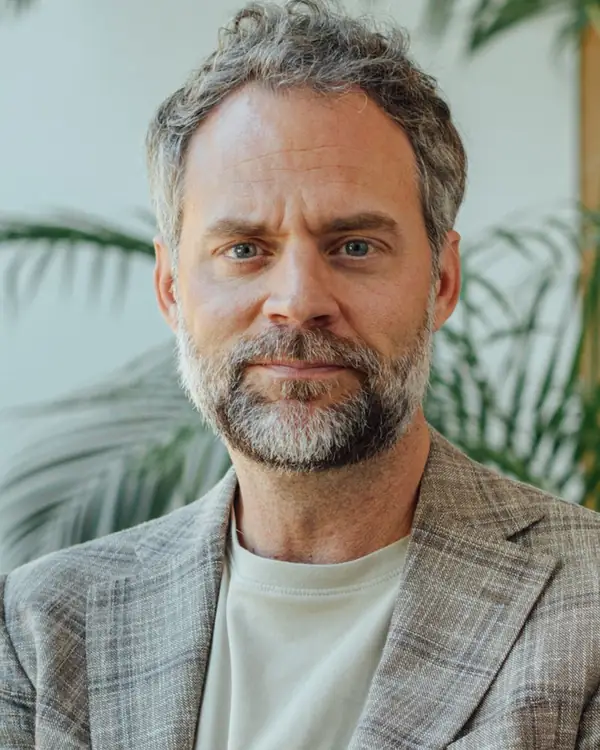
Dr. Mikael Wigell
Founder & CEO
Become a partner
We partner with organisations that bring something we cannot supply alone: a seat at the table, a capability, a network or a body of evidence. Some take part in NESPO. Others work with us on tools, research or international outreach. Each partnership is set up on its own terms.
Talk to our teamWho we work with
Companies: exposed to geoeconomic risk through their supply chains, technology or markets.
Public institutions: ministries, resilience and preparedness agencies, multilateral bodies and financial institutions.
Research and specialist partners: research institutions, universities, law firms and technology companies.